
"coffee tree growth stages"
600 article(s) found

Cultivation techniques of small Coffee guiding the selection of Coffee Bean varieties
Small-grain coffee is a shrub of Rubiaceae, which is suitable for planting in areas with an annual average temperature of 19 ℃ ~ 21 ℃ and an altitude of 800-1400m. It has the advantages of fast plant growth, early fruit and high yield. The land preparation should choose the contour platform with deep soil layer, loose and fertile soil, clean wind, sufficient light and shade trees, annual rainfall of 700 to 1600 mm, slope of less than 30 degrees, and row spacing of 2 to 3 meters.

Coffee tree cultivation requirements for the ecological environment
Arabica coffee is native to the Ethiopian tropical rain forest in northern Africa. The temperature is relatively low, with an average annual temperature of 20 degrees. The origin of medium-sized coffee is near the equator. Therefore, Arabica coffee is more cold-resistant than medium coffee and has a wider adaptability. Medium coffee requires a slightly warmer environment.

The various parts of the coffee plant decompose the shallow root crop of coffee.
Coffee is a shallow root crop, and the plants propagated with seeds have conical roots. Root system refers to the general name of root. The root morphological distribution and depth of shade varieties / soil conditions and agricultural technical measures are different. From the point of view of varieties, the roots of small / medium grain species are shallower, while those of large grain species are deeper. Under normal circumstances, there is a thick and short taproot and many well-developed lateral roots. Yunnan small-grain coffee has a 4-year-old fruit.

Cultivation techniques of small-grain Coffee in Yunnan Province: pest Control
1. Coffee tiger, longicorn beetle. The coffee tiger longicorn beetle harms the coffee trunk for more than 2 years. At first, it eats between the cambium and xylem, and then eats the xylem. It has a great effect on coffee, the light ones make the plants yellow, withered branches and fruit drop, and the serious ones die of the whole plant. At the initial stage of the damage, there was no obvious hole in the appearance, but only slightly raised in the epidermis of the injured area. Prevention and control methods: strengthening the management of ①

Coffee Seedling Technology: the production Management method of Coffee Seedling stage and the distance between Coffee planting plants
Professional coffee knowledge exchange more coffee bean information please follow the coffee workshop (Wechat official account cafe_style) coffee production capacity, usually using a conversion factor to convert the kilograms of berries picked from a coffee tree or a batch into the kilograms of raw beans. This conversion coefficient, also known as bean yield, should be calculated according to different coffee gene types. Elaraby

Cultivation techniques of small Coffee Irrigation and fertilization of Coffee trees
Irrigation of coffee planting areas in Yunnan Province can be divided into rainy season and dry season. Irrigation in the dry season, especially in the flowering period, can ensure the normal growth and flowering of coffee plants, improve the fertility rate, and achieve high yield. Fertilization is one of the key measures to obtain high yield of cultivated coffee. According to the data, for every kilogram of dried beans harvested, coffee trees have to come from the soil.
Common diseases and pests in coffee cultivation and their control methods
It is distributed in all coffee producing areas in the world, and it also occurs in Yunnan, Guangxi and Hainan Island in China. It is one of the major pests of coffee. The coffee tiger longicorn beetle harms the coffee trunk for more than 2 years and begins to eat between the cambium and the xylem.

Cultivation techniques of small-grain coffee: irrigation and fertilization
Irrigation of coffee planting areas in Yunnan Province can be divided into rainy season and dry season. Irrigation in the dry season, especially in the flowering period, can ensure the normal growth and flowering of coffee plants, improve the fertility rate, and achieve high yield. Fertilization is one of the key measures to obtain high yield of cultivated coffee. According to the data, for every kilogram of dried beans harvested, coffee trees have to come from the soil.

The latest introduction of high-quality coffee and raw beans
Raw coffee beans are the seeds of coffee trees. It is the wealth hidden in coffee cherries (coffee berries) that people usually call coffee cherries. They are mistakenly called beans because they are similar to the beans we usually see, but they are actually the seeds of coffee. Usually there are two flat oval coffee beans in the coffee berries, and there is only one in a few coffee berries.

How much water do you make with 15g of hand coffee? How to rush the Golden Bailin Manor Kopi Luwak? What's the story?
Professional coffee knowledge exchange more coffee bean information please follow the coffee workshop (Wechat official account cafe_style) hand coffee 15g how much water? How to rush the Golden Bailin Manor Kopi Luwak? What's the story? Aquaculture environment? Golden Bailin Manor is located in the Malaba Mountains, just south of Bandung City, West Java, with temperatures between 8C and 28C. Golden Bailin Manor
The growth of coffee trees
The growth and fruit of coffee trees varies with different varieties / environmental conditions. In the high altitude area of Yunnan, the small seed coffee cultivated has the advantages of cold climate, large cloud cover, short light and slow plant growth, but the branches develop into sturdy backbone branches after the first branch bears fruit, and the second / third branch has strong ability to produce. The growth is exuberant and the fruit is dense, which is the main fruiting branch, so it is suitable to adopt single trunk shaping. Two / three

After-taste Lazimus Manor, Colombia, the cultivation of boutique coffee beans, geographical location and climate.
Compared with other producing countries, Colombia is more concerned with developing products and promoting production. It is this, coupled with its superior geographical and climatic conditions, that makes Colombian coffee excellent in quality and delicious and famous all over the world. The status of coffee in Colombia is evident in the following example: all vehicles entering the country must be sprayed and sterilized so as not to inadvertently cause disease and damage coffee trees.

Requirements of Coffee on Ecological Environment Environmental requirements for planting Coffee trees
Small seed coffee is native to the lower part of the Ethiopian rainforest in northern Africa. The temperature is relatively low, with an average annual temperature of 20 degrees. The origin of medium-grain coffee is near the equator. Therefore, small seed coffee has stronger cold tolerance and wider adaptability than medium grain coffee. Medium-grain coffee requires a slightly higher temperature. First, the requirement for temperature should be based on the natural conditions of Yunnan, and the suitable planting area of coffee should be selected.
Cultivation Techniques of Coffea arabica in Yunnan
Control methods: ① strengthen management, reasonable pruning, appropriate shade. (2) Artificial killing of adults and larvae, timely cutting down and burning of damaged branches. 2. Coffee leopard wood moth. It is widely distributed and is one of the common coffee pests, which can harm a variety of economic crops. The larvae overwinter in the branches, and the larvae often eat upward in the branches, forming a tunnel of 30~60 cm. Prevention methods: ①

Why are Kona coffee beans famous for the five growth factors round beans are? Authentic Kona coffee bean flavor
Why are Kona coffee beans famous? Delicious coffee takes many small miracles to form the best flavor characteristics of Kona coffee beans. Under certain conditions, coffee factories focus on creating quality seeds to maintain the species. At this stage of development, the acid and sugar of beans have more time to develop. Kona is one of the few places of origin in the world, plus volcanic soil.

Costa Rican rose summer coffee beans brewing small candle manor rose summer coffee beans hand brewing water temperature suggestion
Professional coffee knowledge exchange more coffee bean information please follow the coffee workshop (Wechat official account cafe_style) I believe you are no stranger to Panamanian Rosa coffee beans. Panamanian rosy summer coffee was actually introduced from Costa Rica in 1960, when the Costa Rican Coffee Institute obtained some seeds from Tanzania in 1953.

Planting techniques and soil Environment of Coffee trees
(1) weeding, covering the young coffee garden, weeds are easy to breed, especially in the rainy season, weeding should be done once a month. If the labor force is sufficient, clean the grass should be removed first. Adult coffee garden can be weeded once every 2 to 3 months. If you use herbicides, you should be careful not to spray on the branches and leaves of coffee, and it is more important and prudent to use them in young coffee gardens. Coffee has shallow roots and is vulnerable to adverse climates such as high temperature and drought.
The way of Coffee Development in Myanmar Coffee planting skills Coffee Bean Variety selection
Over the past few years, Myanmar's coffee industry has emerged on the international stage with the cooperation of the Myanmar Agricultural Promotion Agency (Myanmar Agriculture Department), the United States Agency for International Development (USAid), the Coffee quality Association (CQI) and the country's hard-working coffee farmers. When British missionaries introduced the first coffee trees from Costa Rica nearly a hundred years ago, the coffee industry

Introduction of Burmese Coffee Culture Analysis of main Coffee varieties in Myanmar
Over the past few years, Myanmar's coffee industry has emerged on the international stage with the cooperation of the Myanmar Agricultural Promotion Agency (Myanmar Agriculture Department), the United States Agency for International Development (USAid), the Coffee quality Association (CQI) and the country's hard-working coffee farmers. When British missionaries introduced the first coffee trees from Costa Rica nearly a hundred years ago, the coffee industry
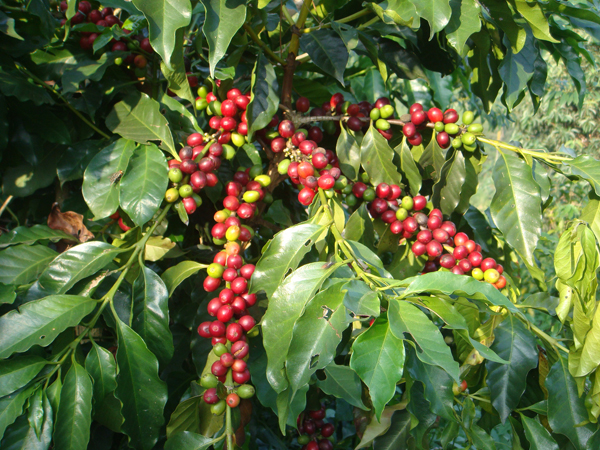
Explain the planting and cultivation of coffee trees in detail to understand the growth environment and needs of coffee trees.
(1) Seedling propagation Coffee seedling propagation can be divided into seed propagation and asexual reproduction. 1. Seed propagation (1) seed collection, seed washing and seed storage during the full ripening period of coffee (the full ripening period of medium-grain coffee in Hainan Island is from February to March, and that of small seed is from September to November). The fully ripe fruits are picked from strong and high-yielding mother trees to make seeds. Immediately after the fruit is harvested, peel and wash the seeds. The method is to place the fruit.